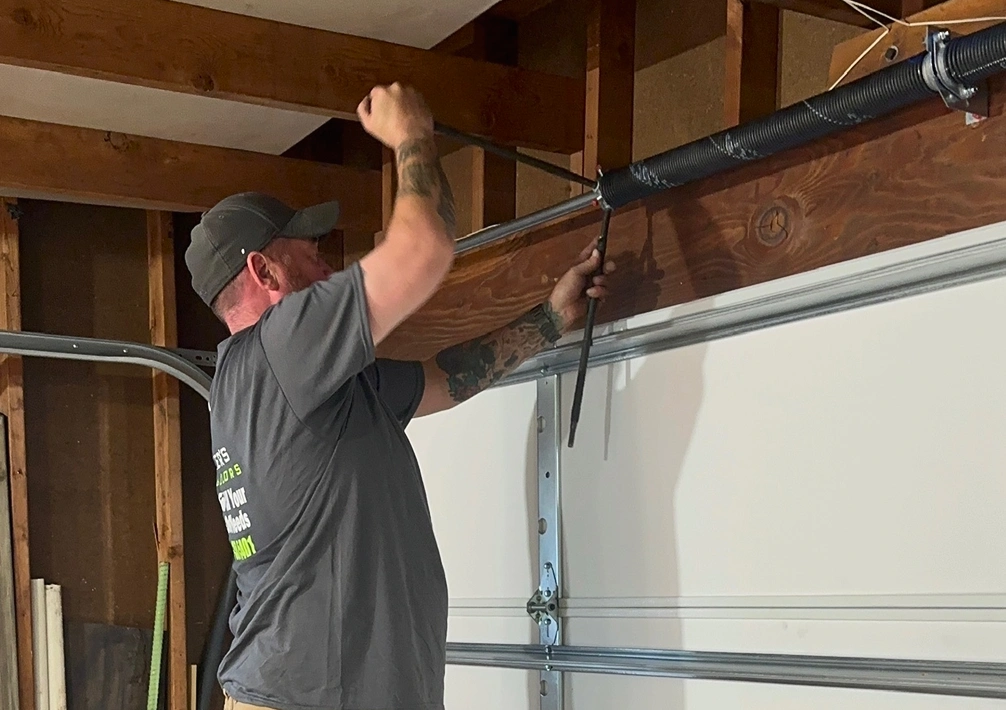
In our recent blog post, we covered the warning signs of broken garage door cables. Cables and springs are the two most common garage door problems that require professional repair – both work under constant tension and handle the full weight of your door with every use.
While cables and springs work together, spring failures tend to be more dramatic and can leave you completely unable to use your garage door. Your garage door springs are the real workhorses of your garage door system. These tightly wound coils do the heavy lifting, counterbalancing hundreds of pounds so your door can open and close smoothly. When a spring breaks, your garage door stops working properly, often without much warning.
The good news? There are usually clear signs that something’s wrong. Here’s what to watch for so you can catch spring problems before they leave you stuck with a door that won’t budge.
1. Your Door Won’t Open (Or Only Opens a Few Inches)
This is the most obvious sign of a broken spring. You hit the opener button and… nothing. Or the door lifts just a few inches and stops.
When a spring breaks, it can’t provide the counterbalance your door needs to open. Your garage door opener isn’t designed to lift the full weight of the door on its own – it just gives the door a gentle push or pull. Without working springs, the opener motor can’t do the job.
You might also notice the opener sounds like it’s straining or the motor runs but the door barely moves. Some openers have safety features that prevent them from trying to lift a too-heavy door, which is why your door might not move at all.
2. You Hear a Loud Bang From Your Garage
Many homeowners report hearing what sounds like a gunshot or firecracker coming from their garage. That loud “BANG” is often the sound of a torsion spring breaking.
Garage door springs are under tremendous tension – sometimes more than 200 pounds of force. When that tension releases all at once, it creates a sharp, explosive sound that can echo through your house.
If you hear this sound and then your door won’t open properly, a broken spring is almost certainly the cause. The sound can happen at any time, even when the door isn’t in use, because springs can break from metal fatigue.
3. There’s a Gap in the Spring Above Your Door
Take a look at the spring (or springs) mounted on the bar above your garage door. A healthy spring should be one continuous coil.
If you see a gap of an inch or two in the spring, like the coils have separated in one spot – that spring is broken. Sometimes you can even see where the metal has snapped apart.
This is the easiest visual check you can do. The gap is usually pretty obvious once you know what to look for. If you have two springs and only one is broken, your door might still open partially, but it will struggle and you shouldn’t keep using it.
4. Your Door Feels Extremely Heavy When You Lift It Manually
Disconnect your opener (pull the manual release handle) and try to lift your door by hand. A properly balanced door with good springs should feel relatively light – you should be able to lift it with one hand without much effort.
If the door feels like it weighs a ton and you can barely budge it, your springs aren’t providing the counterbalance they should. This could mean:
- One or both springs are broken
- The springs are extremely worn and stretched out
- The springs are the wrong size for your door
A garage door typically weighs between 130 and 350 pounds depending on size and material. Without functioning springs, you’re lifting all that dead weight.
5. The Door Slams Down Hard and Fast
Does your garage door crash down when closing instead of lowering smoothly? This is dangerous and usually means your springs are broken or have lost their tension.
Working springs provide controlled resistance in both directions. When they fail, gravity takes over and your door comes down fast – too fast.
This is a serious safety issue. A rapidly falling garage door can cause injury or damage anything in its path. If your door is slamming down, stop using it immediately and call for repairs.
Why Cold Weather Can Accelerate Spring Failure
Garage door springs don’t last forever, they’re rated for a certain number of cycles (one cycle equals opening and closing). Most standard springs are rated for 10,000 cycles, which typically means 7-10 years of use.
But if you live in a region with harsh winters, especially in areas like the Twin Cities metro where we experience extreme temperature swings, your springs might fatigue faster. Cold metal becomes more brittle, and the constant expansion and contraction from temperature changes puts extra stress on the spring material.
This is why many spring failures happen during winter months. The combination of metal fatigue and cold temperatures creates the perfect conditions for a snap.
Never Try to Replace Springs Yourself
This can’t be stressed enough: garage door spring replacement is extremely dangerous and should never be attempted as a DIY project.
Torsion springs (the ones mounted on a bar above your door) are under enormous tension even when they’re broken. They require special tools and training to replace safely. Without the right tools and training, you’re risking crushed fingers, broken bones, or worse. It’s simply not worth it.
Extension springs (the ones that run along the side tracks) are slightly less dangerous but still require proper tools and safety cables.
Professional technicians know how to release and apply spring tension safely. They also ensure the replacement springs are the correct size and weight rating for your specific door. The wrong springs can cause your door to work improperly or break again quickly.
What Happens If You Keep Using a Door with Broken Springs
You might think, “My opener can still lift the door a little, so I’ll just keep using it until I can get it fixed.”
This is a bad idea. Here’s what can happen:
- Your garage door opener motor burns out from being overworked
- The door can fall suddenly and trap your car or injure someone
- Other parts like cables, rollers, and tracks get damaged from the strain
- Your opener’s plastic gears can strip out (an expensive repair on top of the springs)
What starts as a spring replacement becomes a much bigger repair bill. Plus, you’re putting yourself and your family at risk every time you use the door.
Time to Get Your Springs Replaced?
If you’ve noticed any of these warning signs, especially that loud bang or a visible gap in your spring – it’s time to call in the professionals.
We’ve been repairing and replacing garage door springs throughout the St. Paul and Twin Cities metro area for over 23 years. We know how frustrating it is when your garage door stops working, which is why we offer reliable service with fair pricing.
We will inspect your entire garage door system, replace broken springs with high-quality parts that match your door’s specifications, and test everything to make sure your door operates safely and smoothly. Most spring replacements can be completed in a single visit.
Don’t wait until you’re stuck in or out of your garage. Contact us today to schedule your garage door spring replacement service and get your door back to working like it should.